
 LearnBangla
National symbols
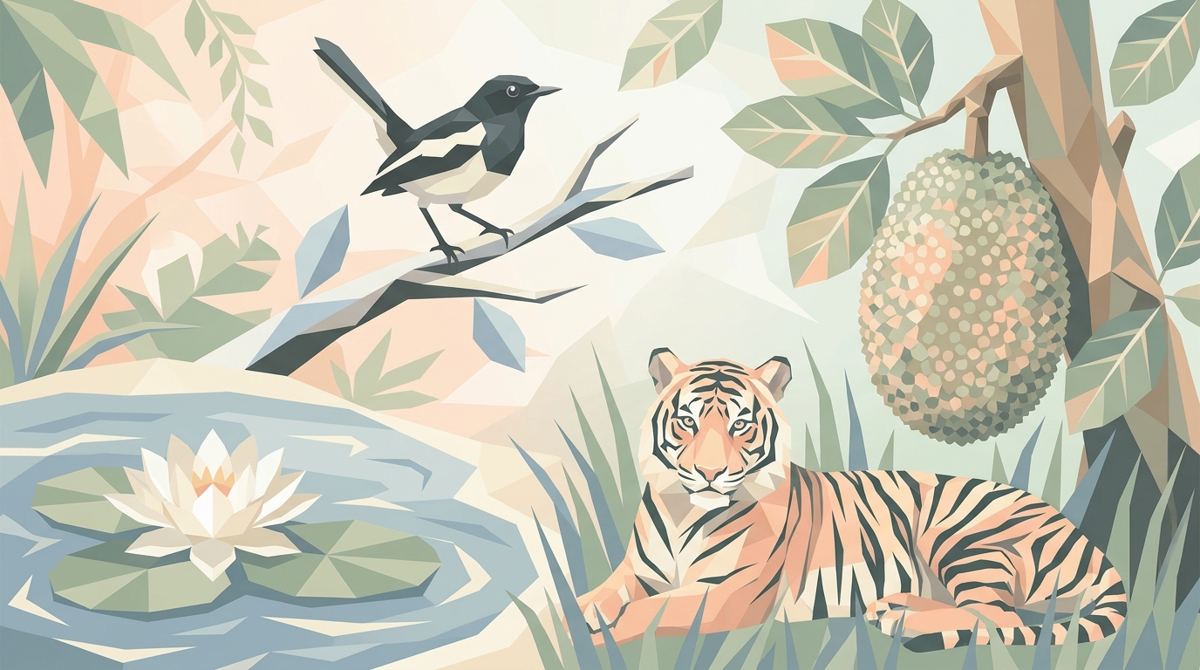
Bangladesh's national symbols are all things you can meet in daily life: the shapla (water lily), the doel (magpie robin), the Royal Bengal tiger and the jackfruit, which can weigh more than 30 kg.
The story behind the language you're learning: the students of 1952, the war of 1971, the new year in April, and the everyday things every Bangladeshi knows. All of it comes up in the LearnBangla courses.
In 1948 the government of Pakistan, which then included today's Bangladesh, moved to make Urdu the only state language, though most people in East Bengal spoke Bangla. On 21 February 1952 students in Dhaka defied a ban on gatherings, and police opened fire near Dhaka Medical College. Among those killed were Abul Barkat, Rafiq Uddin Ahmed, Abdul Jabbar, Abdus Salam and, the next day, Shafiur Rahman.
The Shaheed Minar now stands near that place. Every year people walk there barefoot at dawn to lay flowers. This walk is called প্রভাতফেরি (probhat pheri), and everyone sings the same song on the way. Abdul Gaffar Chowdhury wrote it and Altaf Mahmud set it to music. The night before, volunteers paint আলপনা (alpona), flowing folk patterns, along Dhaka's roads.
In 1999 UNESCO declared 21 February International Mother Language Day. Few languages have been defended at such a cost, which is why Bangla matters so much to the people who speak it.
The students who died for Bangla in 1952 started something bigger than a language. Over the next two decades the demand to speak Bangla became a demand to govern in it. In 1971 it became a war for independence.
Students are shot in Dhaka while defending Bangla as a state language. The day becomes a symbol of Bengali identity.
Pakistan's first constitution makes Bangla a state language alongside Urdu. The wider grievances over power and money remain.
Protests across East Pakistan, the গণঅভ্যুত্থান (gonobhyutthan), help bring down President Ayub Khan.
The Awami League wins an outright majority in Pakistan's national assembly. The assembly is postponed and power is not handed over.
At the Ramna Racecourse, now Suhrawardy Udyan, Sheikh Mujibur Rahman tells a huge crowd that the struggle this time is for freedom.
The Pakistan Army launches a crackdown in Dhaka. Students, teachers and ordinary people are killed that night.
Bangladesh marks this as Independence Day, স্বাধীনতা দিবস (shadhinota dibosh).
Freedom fighters, the মুক্তিযোদ্ধা (muktijoddha), fight back. Around ten million people flee to India as refugees. Estimates of the dead range from hundreds of thousands to three million, the figure Bangladesh officially commemorates.
Teachers, doctors, writers and journalists are abducted and killed in the war's final days. The date is Martyred Intellectuals Day, শহীদ বুদ্ধিজীবী দিবস (shohid buddhijibi dibosh).
After India joins the war in early December, Pakistani forces surrender in Dhaka. Bangladesh celebrates Victory Day, বিজয় দিবস (bijoy dibosh).
UNESCO declares 21 February International Mother Language Day. Today the dead of 1971 are honoured at the Jatiyo Smriti Soudho, the National Martyrs' Memorial in Savar.
The war reached far beyond Bangladesh. On 1 August 1971, George Harrison and Ravi Shankar held the Concert for Bangladesh in New York to raise money for refugees. It was the first big benefit concert of its kind. And just weeks after independence, in January 1972, the new country founded its own airline, Biman Bangladesh, with a white crane, the bolaka, as its logo.
This is the outline most Bangladeshi students learn. Historians still debate some details, especially the death toll.
Bangladesh has its own Bangla calendar, and its new year, Pohela Boishakh, falls on 14 April. The current Bangla year is 1433. Since 2019 the calendar has been fixed, so national days always fall on the same Bangla date. 21 February is always 8 Falgun, and Victory Day is always 1 Poush.
Every LearnBangla lesson ends with a short fact like these.
Bangladesh's national symbols are all things you can meet in daily life: the shapla (water lily), the doel (magpie robin), the Royal Bengal tiger and the jackfruit, which can weigh more than 30 kg.
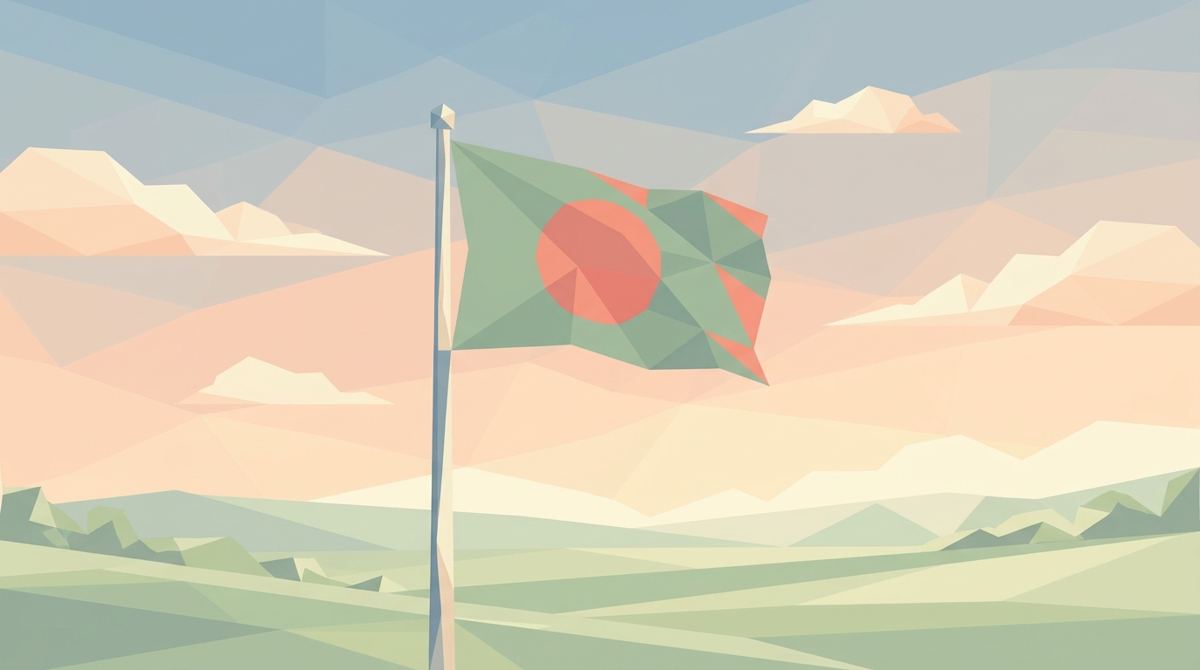
The flag is a red disc on green: green for the land, red for the sun and those who gave their lives in 1971. The disc sits slightly towards the pole, so it looks centred when the flag flies.
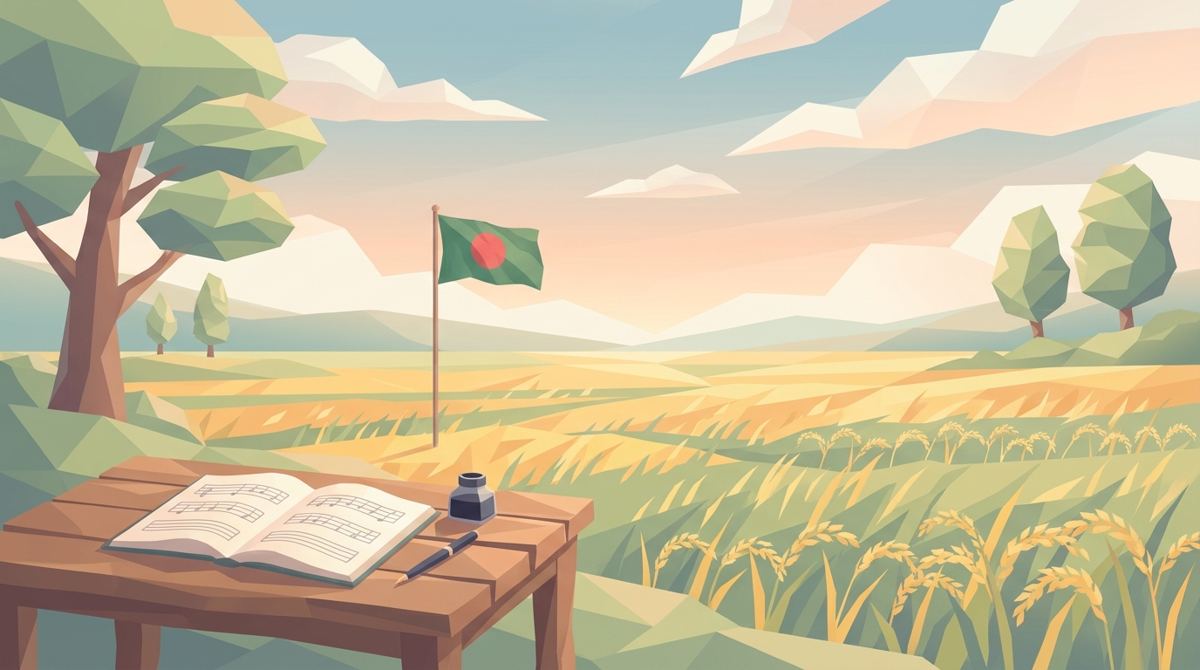
Rabindranath Tagore wrote the words and music of Bangladesh's national anthem, Amar Shonar Bangla, and also India's. In 1913 he became the first non-European to win the Nobel Prize in Literature.
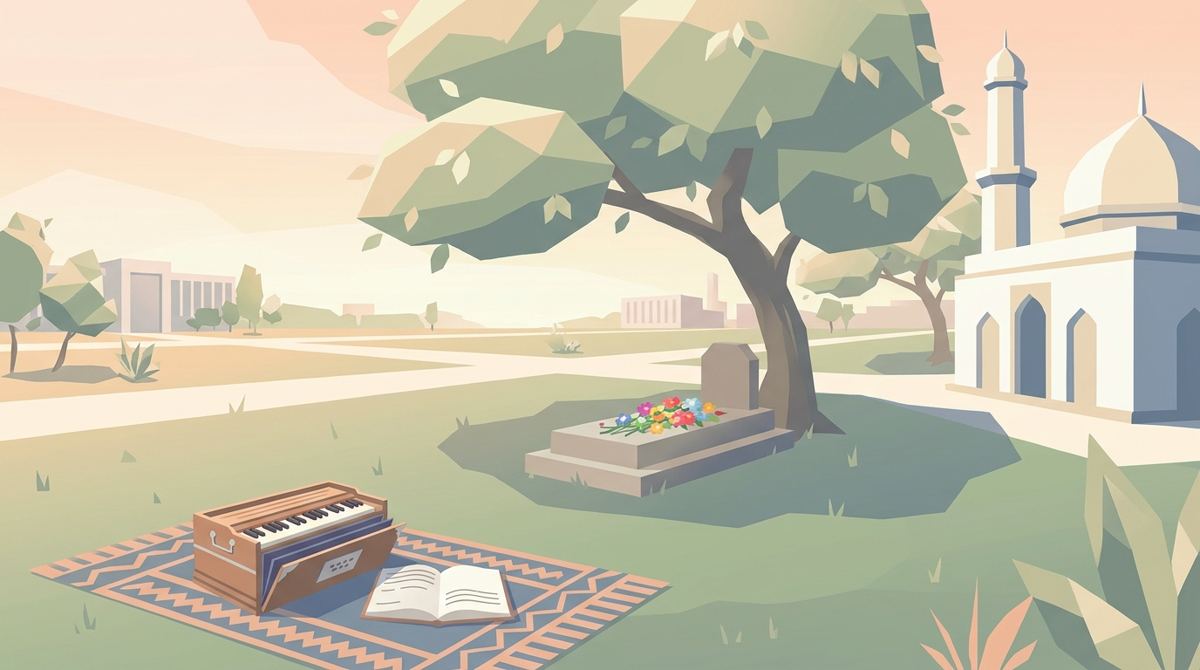
Kazi Nazrul Islam is Bangladesh's national poet. He wrote thousands of songs, known as Nazrul Geeti, and is buried beside the mosque at Dhaka University.
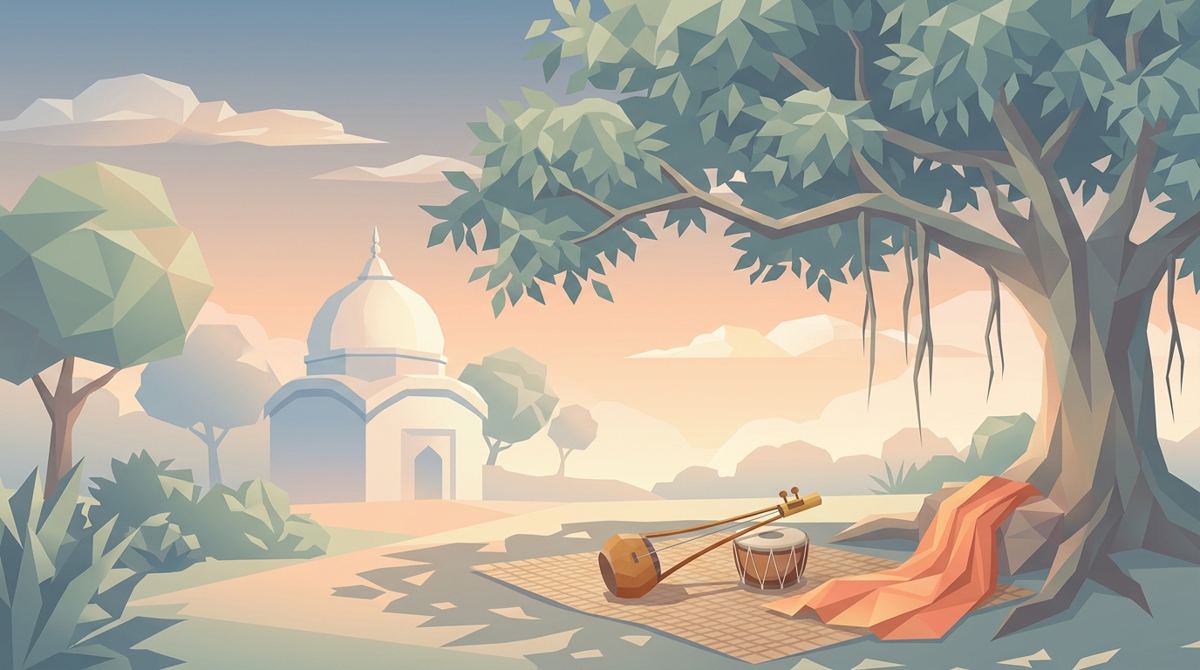
Bauls are wandering mystic singers who play a one-stringed ektara. The songs of Lalon Shah, the most famous Baul, are still sung at his shrine in Kushtia, and UNESCO recognises Baul songs as world heritage.
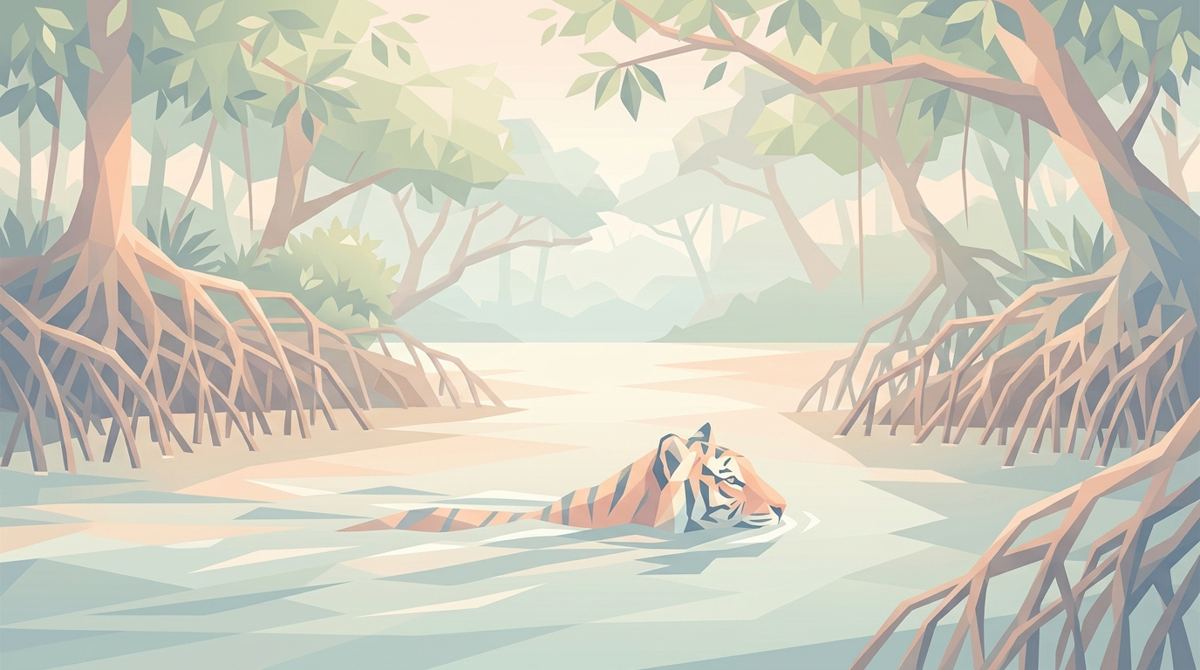
The world's largest mangrove forest is in the south-west. Its Royal Bengal tigers swim across tidal channels between islands, and the forest is a UNESCO World Heritage Site.
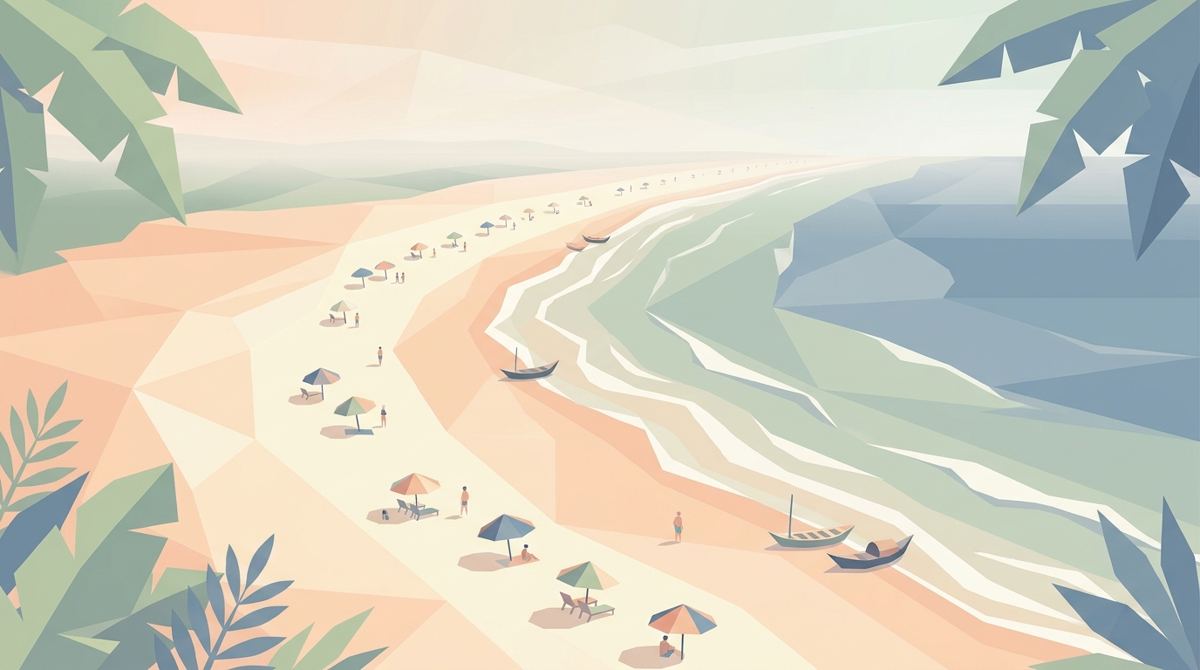
Cox's Bazar has the world's longest natural sea beach, an unbroken stretch of sand of about 120 km along the Bay of Bengal.

Bangladesh has around 700 rivers, which is why boats and multi-deck launches are still an everyday way to travel, especially in the south.

In Sreemangal, the tea capital of Bangladesh, a tea cabin serves tea in seven coloured layers poured into one glass without mixing.
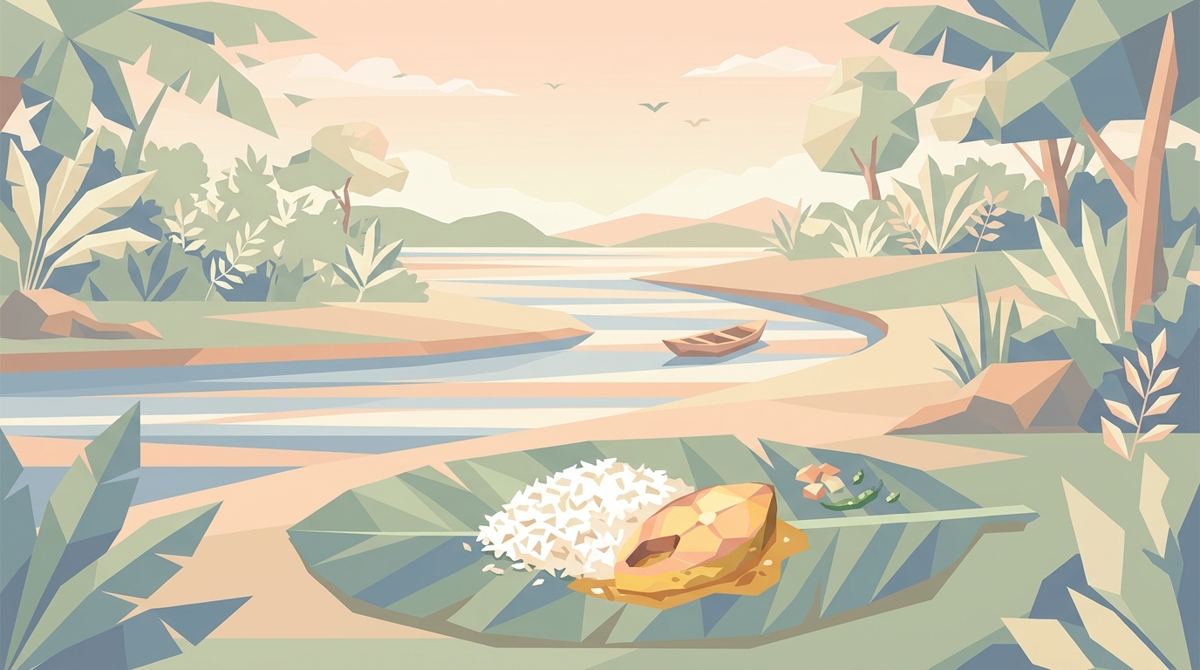
The saying মাছে-ভাতে বাঙালি ("fish and rice make a Bengali") is almost a national motto. The national fish, ilish (hilsa), mostly comes from Bangladesh's rivers.
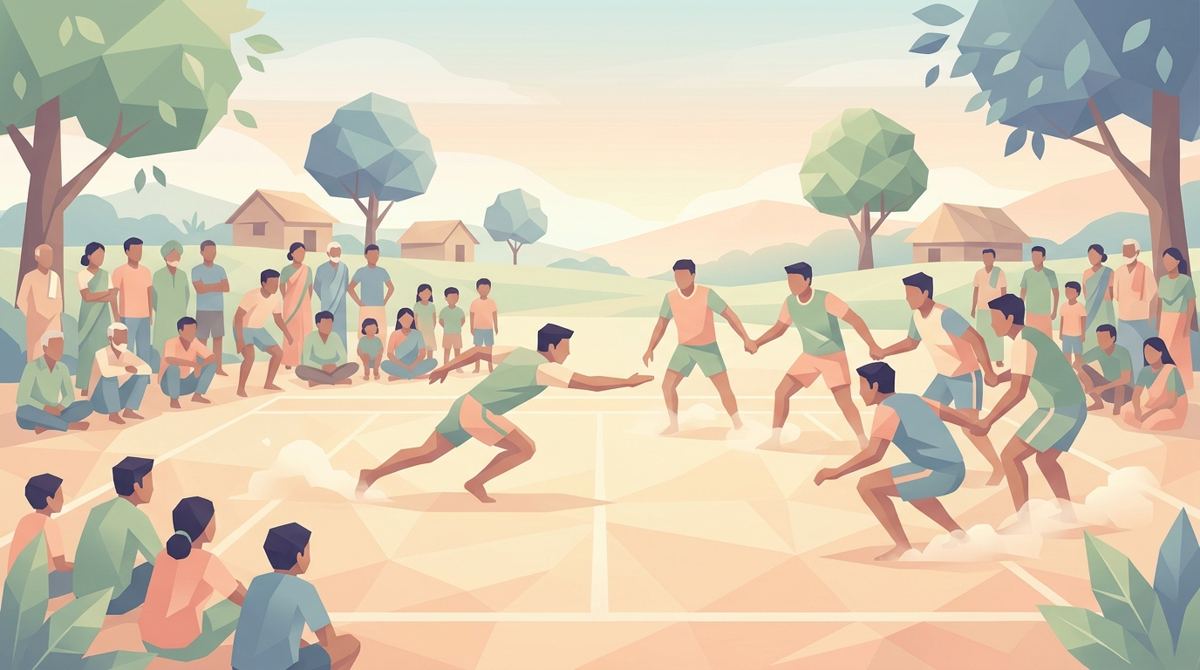
Kabaddi, called ha-du-du in villages, is the national game: a raider holds one breath, chanting, while tagging opponents and racing back.
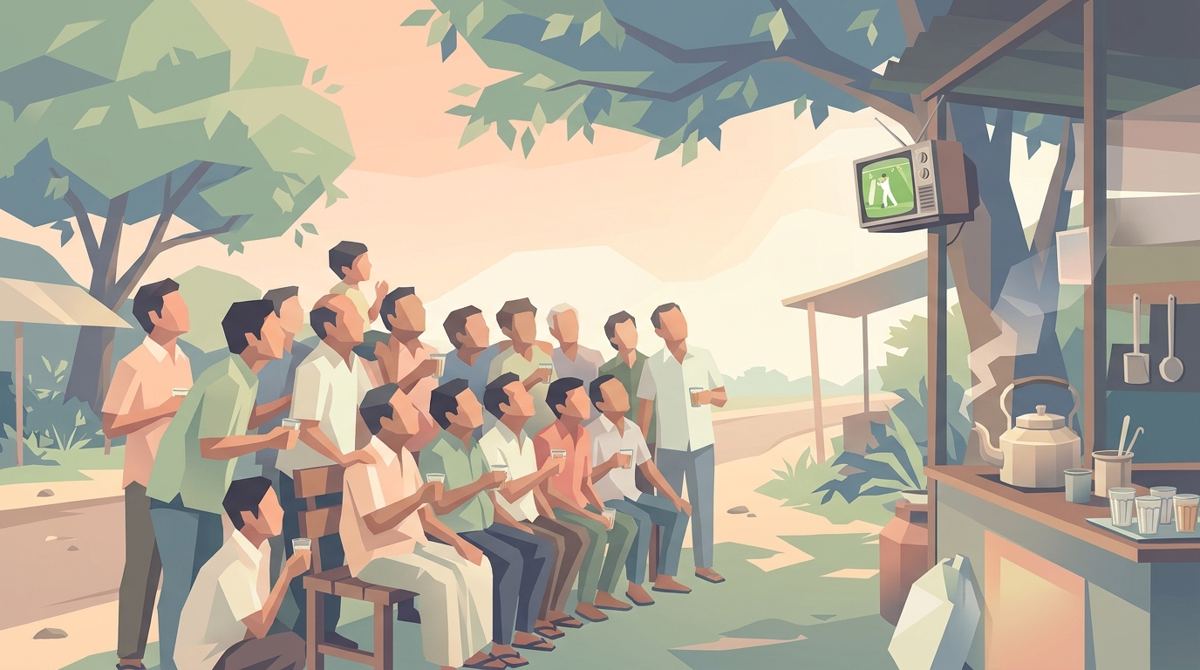
Bangladesh became a Test cricket nation in 2000. When the national team plays, crowds gather round a single TV at the local tea stall.
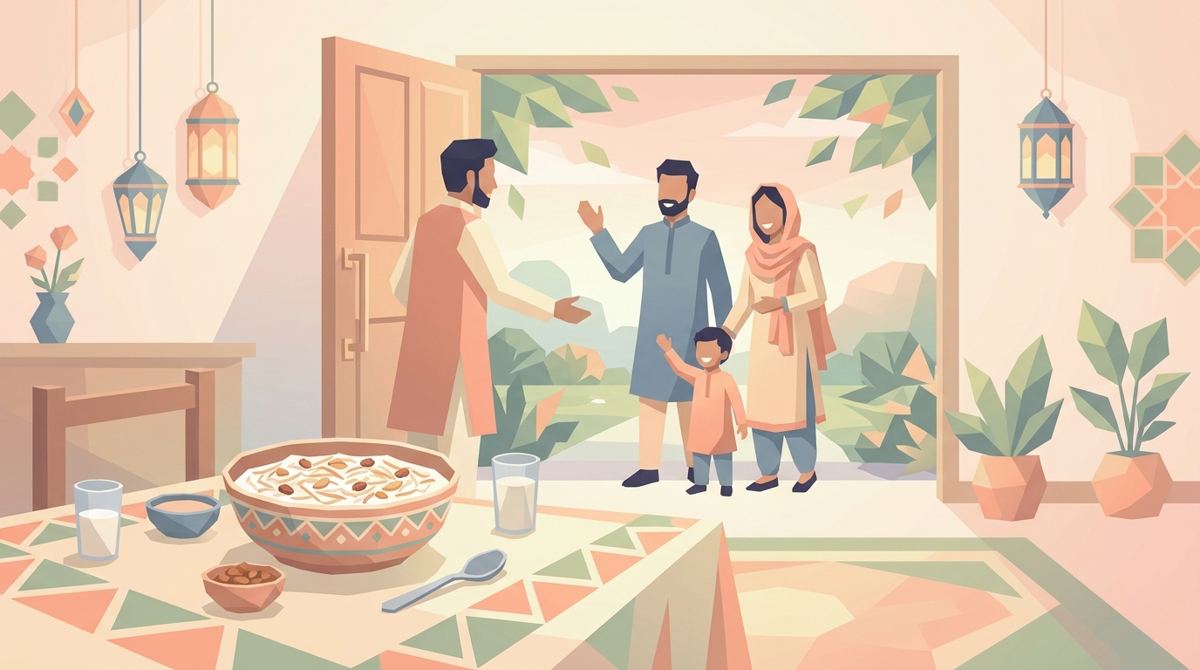
On Eid morning almost every home serves shemai, sweet vermicelli cooked in milk, to anyone who drops by. Visiting neighbours is half the fun.
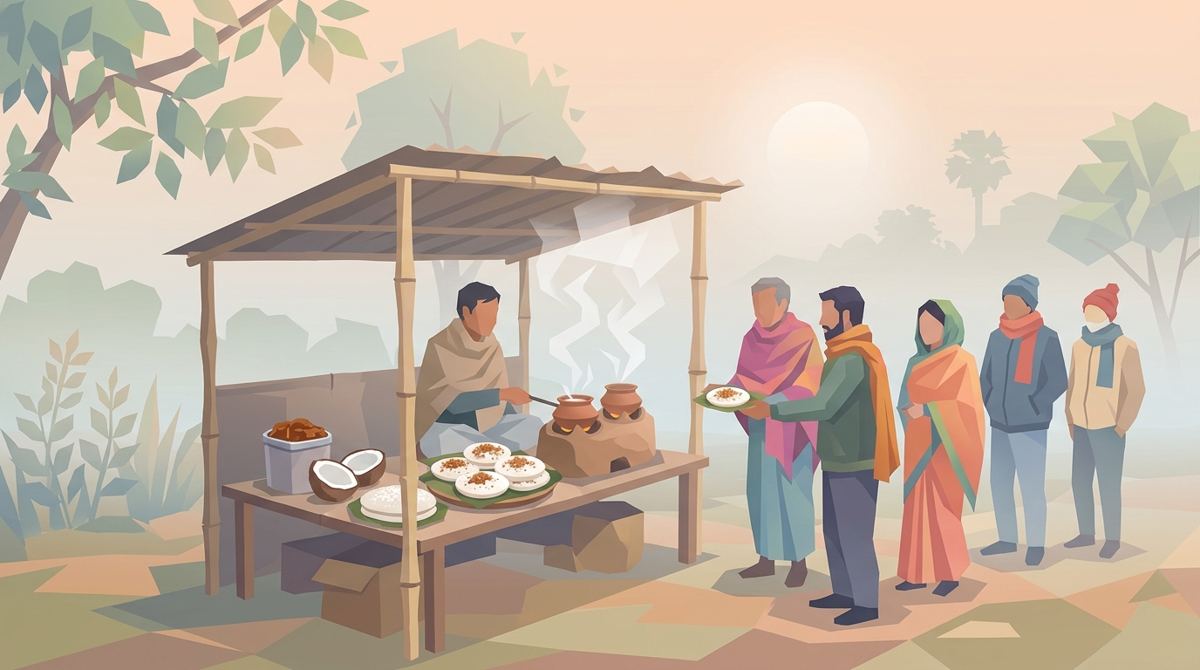
Winter is pitha season. Families make bhapa pitha, steamed rice cakes filled with date-palm gur and coconut, and roadside stalls sell them hot on foggy mornings.
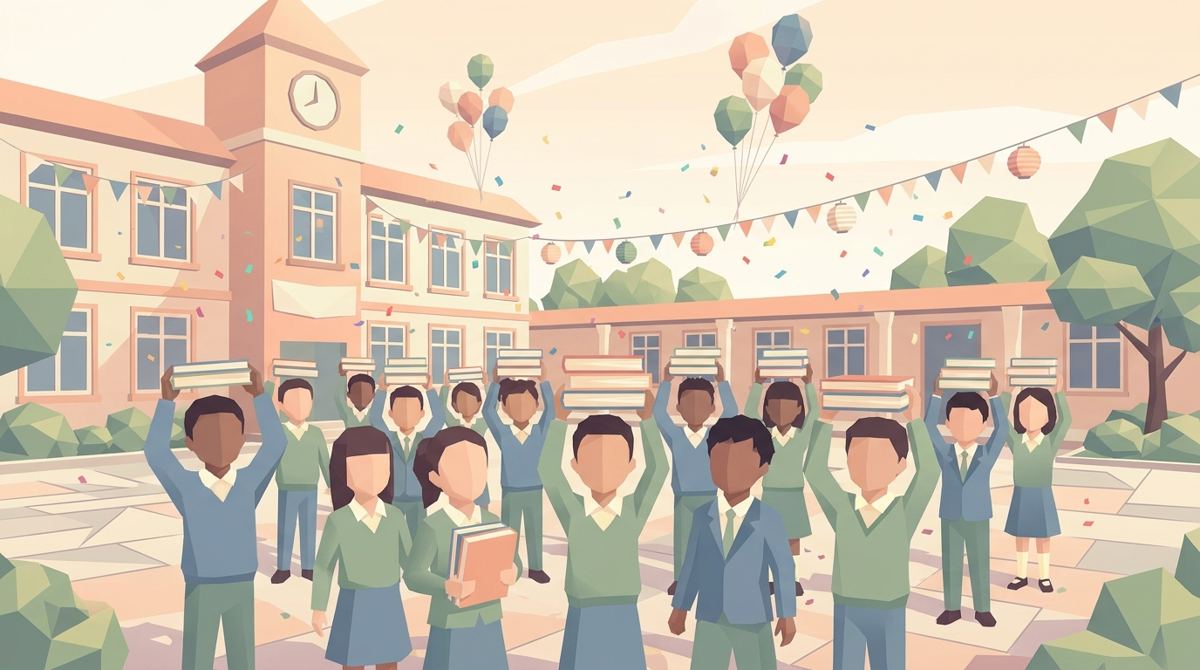
Every 1 January, Bangladesh hands out free new textbooks to tens of millions of pupils, a day schools celebrate as বই উৎসব, the book festival.
Audio lessons from your first word to full conversations, free to start. Five quick questions pick your starting point.